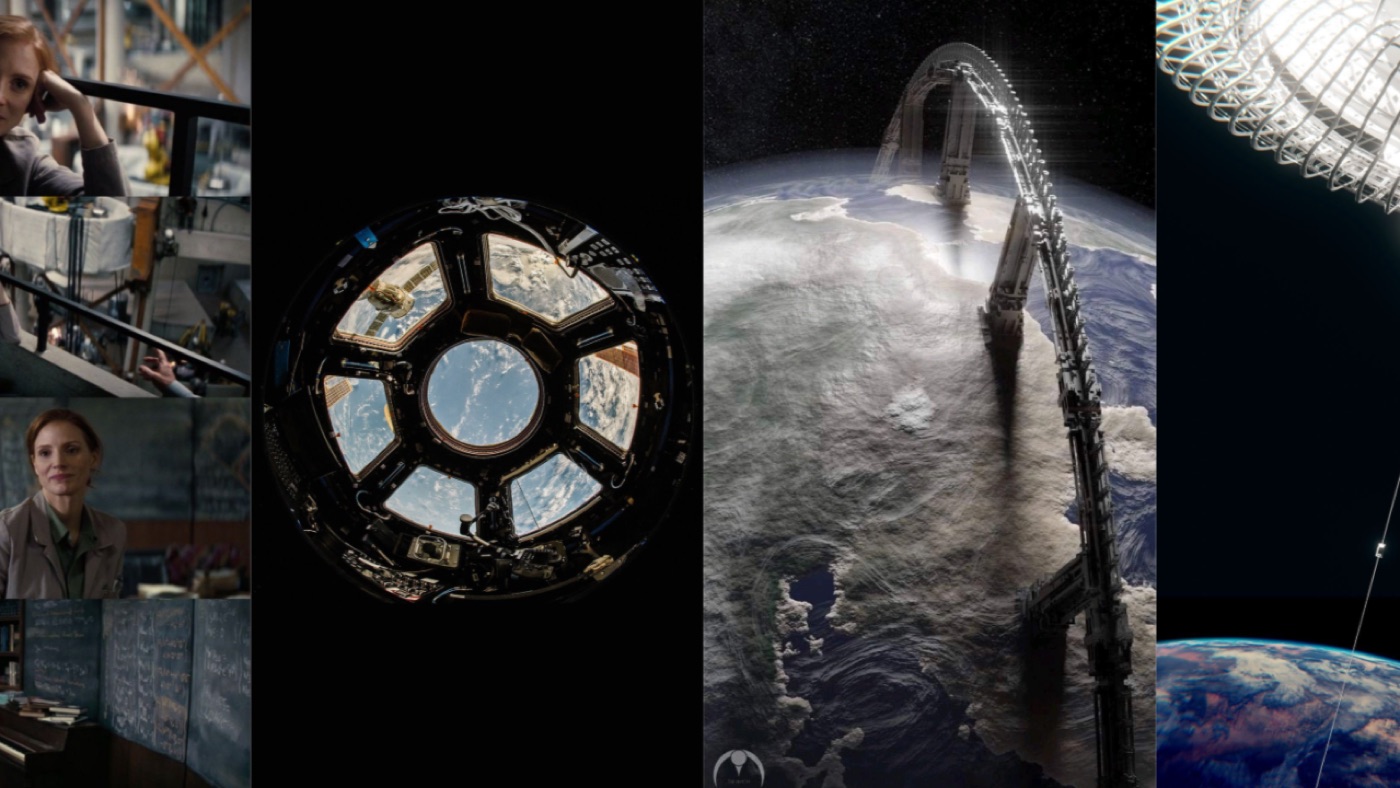
Every industrial revolution in human history has started exactly the same way: cheap energy in a brand-new place It was coal by the river, then oil by the port, and today, the next industrial frontier is opening up 400 kilometers above our heads, a place where the sun never sets, cooling is entirely free, and the traditional rules of earthly manufacturing no longer apply
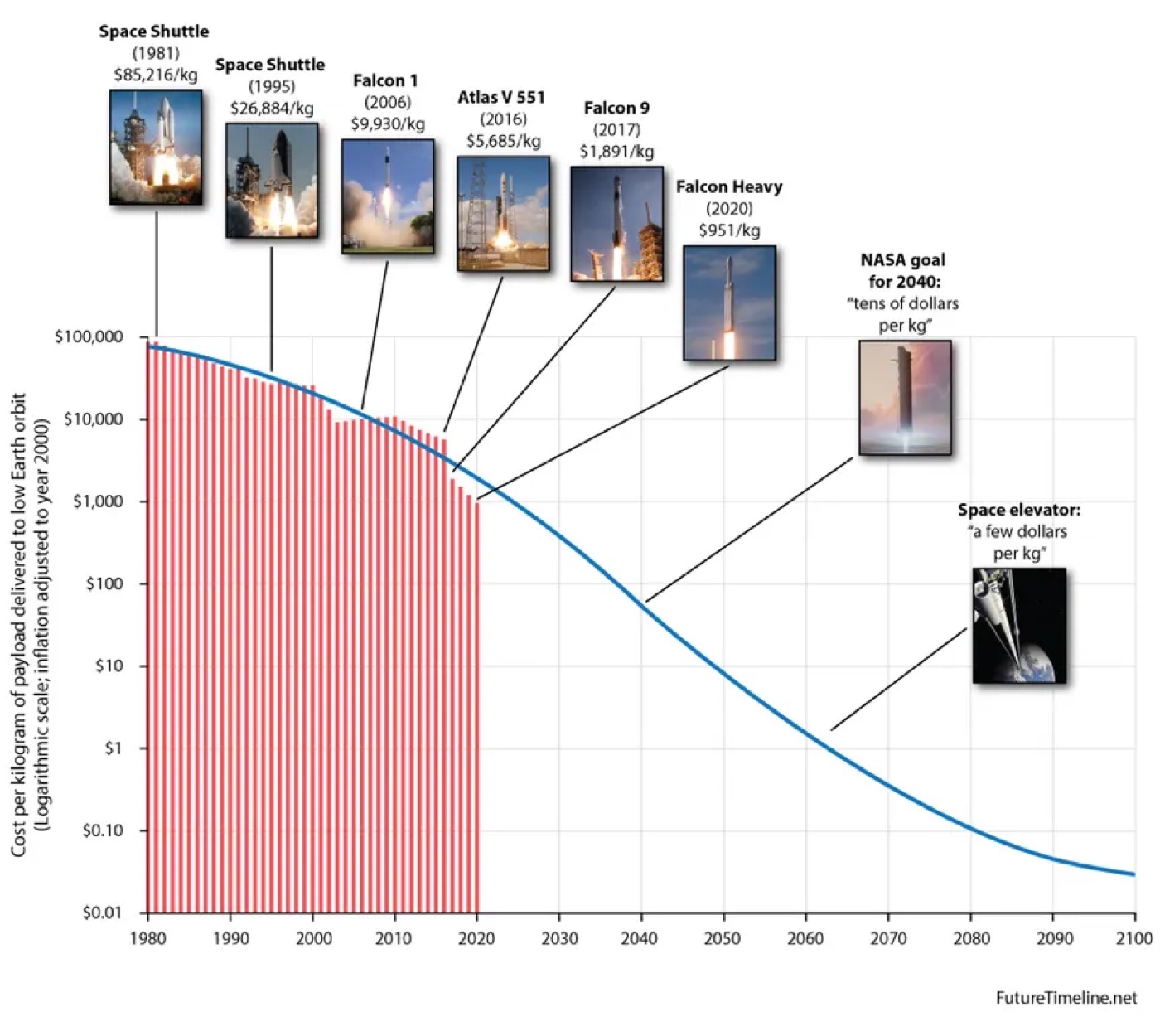
The 100x Launch Collapse
There is a historical pattern that never fails: when the cost of reaching a geographic frontier collapses, industry immediately moves in. You can see it in railroads unlocking resources of the American West, and container ships built modern East Asia
We are currently witnessing this exact economic law play out in space:
- The Shuttle Era: Putting 1kg of payload into orbit cost roughly $65,000
- The Falcon 9 Era: SpaceX slashed that price tag down to approximately $2,500.
- The Starship Era: Starship is actively designed to push that cost toward $200
The Starship Era: Starship is actively designed to push that cost toward $200
This is not a minor, incremental improvement; it is a 100x collapse in price. Every time the cost of launch drops by a factor of ten, a whole wave of theoretical space concepts suddenly transitions from expensive science experiments into highly profitable businesses. which takes us into diving a bit deeper into the math, and what can happen
The Economic Realities of Earth vs. Space
Why are companies racing to get to Low Earth Orbit (LEO)? Beyond curiosity, it boils down to a massive physics shortcut and a crushing bottleneck on Earth, which basically comes into 2 points:
- Speed-to-Compute Arbitrage: On Earth, securing a 100 MW grid connection in major markets can take up to 7 years due to grid queues and transformer backlogs. A 1 MW AI compute cluster generates roughly $70 million in revenue per year. A 5-year delay on Earth represents $350 million in lost revenue. In space, once routine heavy launches scale, a 1 MW cluster can be deployed in 12 to 18 months, completely bypassing the terrestrial backlog
- Environmental Arbitrage: Space offers a zero-gravity environment that makes certain high-value products, like purer semiconductors and flawless pharmaceuticals, physically impossible to replicate on Earth
Environmental Arbitrage: Space offers a zero-gravity environment that makes certain high-value products, like purer semiconductors and flawless pharmaceuticals, physically impossible to replicate on Earth
Where the most important factor you can notice is energy, which we lack almost the most down earth, so worth diving a bit on the math of this as well:
The Solar Math: Earth vs. Orbit
On Earth, solar panels must constantly fight weather, atmospheric interference, seasonal changes, and the inevitability of night. In orbit, those limitations vanish. Sunlight hits solar panels at its full, unfiltered strength of $1,360W/m2. By utilizing a sun-synchronous orbit that constantly rides the line between day and night, solar hardware can harvest power continuously, and can power whatever needs to be powered
Solar in space is 8x more effective than solar on earth, but there's a catch. i'll be writing more about it in the future
Tenant 1: AI and Orbital Data Centers ( Starcloud )
The most energy-hungry industry on Earth is the first to pack its bags. Ground-based AI data centers are hitting a massive wall, with half of planned U.S. capacity currently delayed or canceled due to power grid queues, zoning laws, and local opposition
In orbit, there are no neighborhood associations or municipal grid constraints, There is no NIMBY (Not In My Backyard) in space
In November 2025, a startup called @starcloud launched a satellite equipped with an NVIDIA H100 GPU and successfully trained the very first AI model in space. Today, it is a $1.1 billion company making it the fastest unicorn in Y Combinator’s history, with major backing and partnerships from AWS, Google Cloud, and NVIDIA (shoot out to Philip Johnston for pioneering this sector the best way possible)
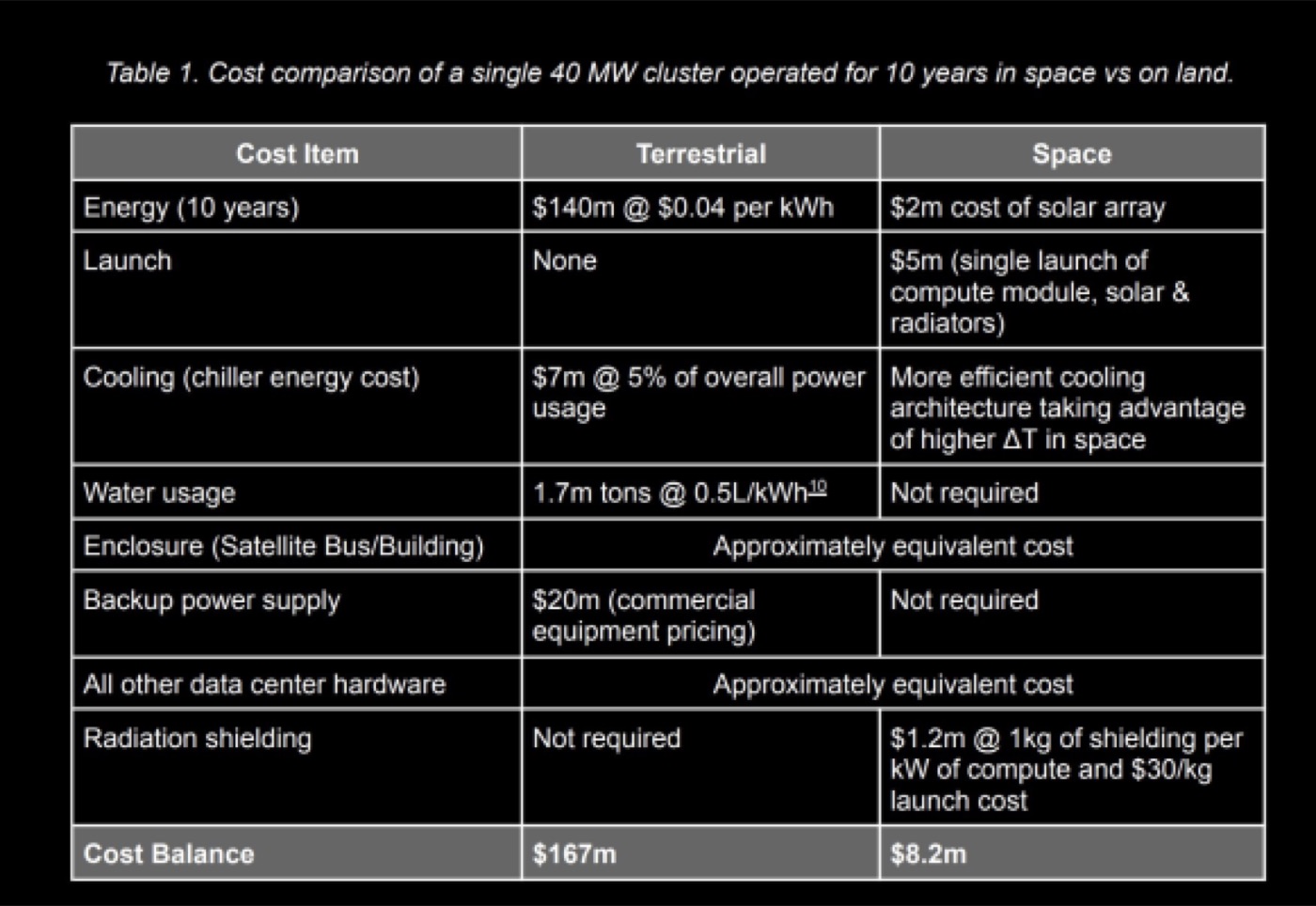
Space data centers math makes sense
Starcloud has already filed for an 88,000 satellite constellation, targeting an incredibly competitive electricity cost of $0.05 per kWh Shortly after, SpaceX filed for its own one million orbital data center satellites. Analysts now project the orbital data center market to balloon from roughly $2 billion to $39 billion by 2035
I think you can see where this is going
Tenant 2: Microgravity Factories (Varda & Space Forge)
Orbit offers a second priceless asset that cannot be replicated on Earth: microgravity Without gravity constantly stirring the molecular pot, crystals can grow with a level of structural purity that is physically impossible on the ground. Two high-margin industries are leading this charge:
Pharmaceuticals: Varda Space Industries
Varda has successfully flown six robotic "factory capsules" that manufacture delicate drug formulations in orbit before returning them safely to Earth. Will Bruey and the team have already secured their first major pharmaceutical deal with United Therapeutics. Because the active ingredients for 450 million vaccine doses can fit inside just two milk jugs, paying for a rocket launch is a minor rounding error when the end product is valued at $1 million per kilogram
Semiconductors: Space Forge
The UK-based startup, led by Joshua Western is growing semiconductor crystals in orbit. By eliminating gravity-induced defects, they are achieving incredibly high yields for high-performance chips that sell for thousands of dollars each
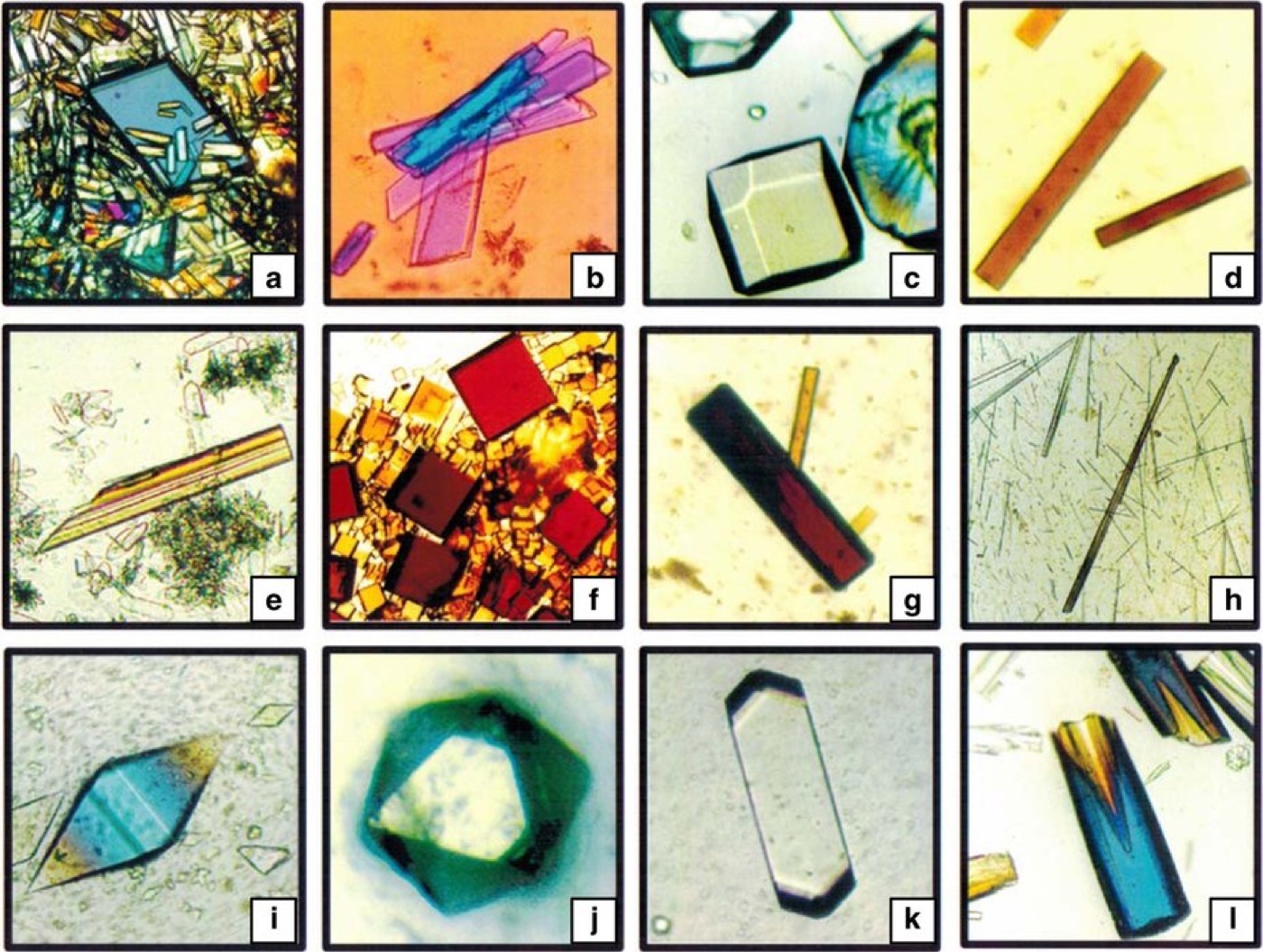
Crystals grown by American scientists on the Russian Space Station Mir in 1995
Tenant 3: The Orbital Utility Grid & In-Space Nuclear
Every rapidly growing industrial zone eventually requires a dedicated power utility, same thing will be here, but the source is the biggest of them all, which is the sun
Laser Beaming (Star Catcher): Instead of relying solely on built-in solar arrays,
Star Catcher with their founder Andrew Rush beams concentrated sunlight directly to other satellites' existing solar panels using advanced lasers. This can boost a satellite's power capacity by up to 10x without requiring any hardware modifications to the client satellite. The company currently holds the world power-beaming record and boasts a massive $3 billion+ customer pipeline which already includes Starcloud
Nuclear in Space (Antares):
While solar reigns supreme in sun-synchronous orbits, shadow zones require constant, high-density power. @AntaresNuclear is building micro-sized nuclear reactors designed to operate off-grid in remote locations, including space
In June 2026, Antares beat a major Department of Energy target by achieving initial criticality with its Mark-0 microreactor. This makes it the first novel reactor design to undergo a fuel test in over 50 years. Built using ultra-safe TRISO ceramic pellet fuel, these reactors are designed to produce between 100 kW and 1 MW of continuous power, providing the reliable baseload energy needed for deep-space missions and heavy orbital operations where sunlight cannot reach
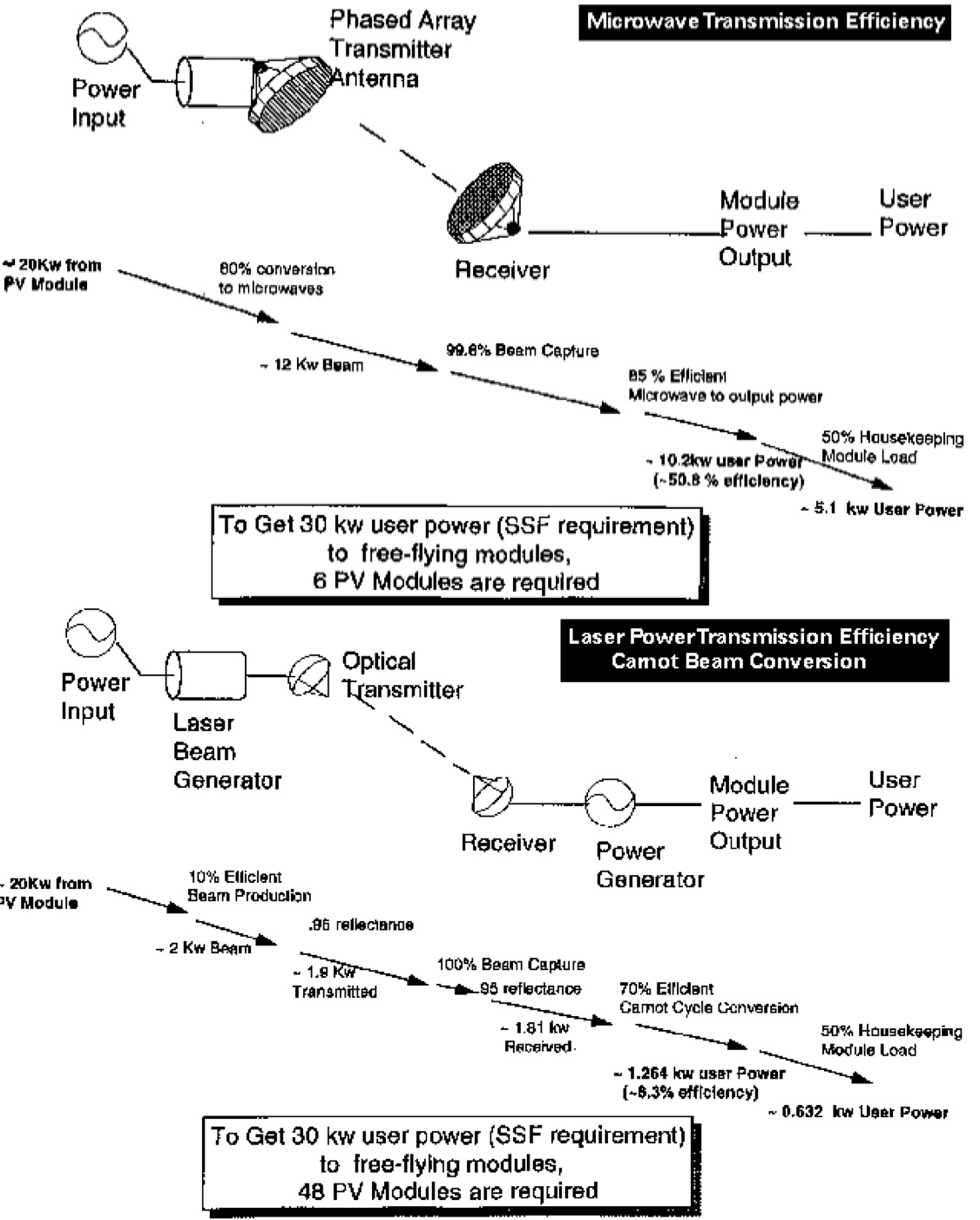
Space solar energy can be useful not only for space vehicles, but for earth as well
The transition of space from an elite scientific frontier to a bustling commercial marketplace is no longer a slow, multi-decade projection. By the numbers, the global space economy is on track to cross $1 trillion by the early 2030s, surging toward an estimated $1.8 trillion by 2035
This massive influx of capital is structurally shifting how we build things. The economic dominoes are falling in rapid succession:
Cheap Rockets > Abundant Solar and Nuclear Power > AI Data Centers Move Up > Manufacturing Follows > Orbital Grid Emerges
By 2031, we will see massive laser power stations feeding gargantuan AI compute clusters floating far above the clouds, while robotic pharmaceutical capsules streak back down to Earth on weekly, scheduled freight runs. The last time an industrial zone scaled this fast, we built Shenzhen. This one has no zoning board

Varda - Space Froge - Star Catcher - Starcloud
What to Look For Next
As this trillion-dollar frontier materializes over the next five years, look for three critical leading indicators that will signal the orbital economy has reached escape velocity, which i will write about in future articles, mainly focusing on in orbit logisitics, what can we get back to earth in terms of energy, and how financial markets will react and adopt with this